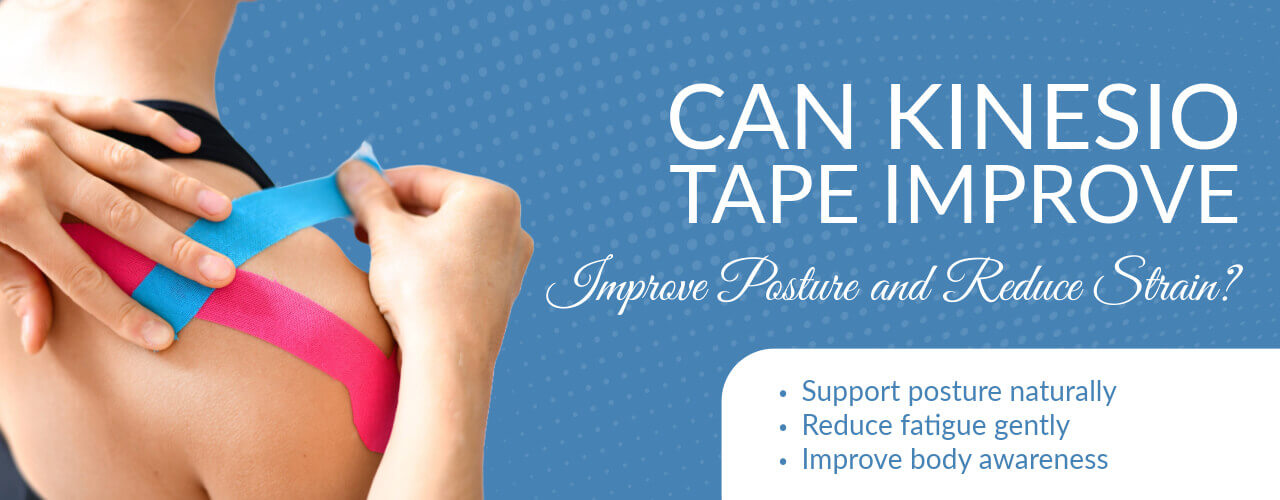
Poor posture can lead to a surprising number of musculoskeletal problems, from nagging neck stiffness to persistent back and shoulder pain. Many people try to correct their posture with home gadgets or wearable supports, but they may be overlooking one widely used clinical tool. One question we often hear is: can Kinesio tape for posture actually help?
This flexible, stretchy tape has been used for decades in physical therapy, sports medicine, and rehabilitation settings. When applied strategically, it may offer support and feedback to guide better body alignment. Let’s look at how physical therapy uses taping effectively, and what else must be in place for real, lasting improvement.
Slouched, Sore, and Stiff: What Poor Posture Really Does to You
Posture isn’t just about appearance. Poor alignment often causes certain muscles to become overactive and tight while others weaken and stop supporting the spine efficiently. Over time, this imbalance can lead to discomfort in the neck, shoulders, lower back, and even headaches. Many people struggle with pain that seems to come and go depending on their activity level or how long they sit.
Those who work at desks, stare down at phones, or drive for long periods may notice increasing tension across their upper body. When this becomes a pattern, it’s easy for discomfort to escalate. Physical therapists often see patients whose symptoms have grown worse simply because poor posture was never addressed early.
Don’t Fall for It: Common Myths About Posture and Tape
There’s a common misconception that Kinesio tape works like a brace, pulling your shoulders back and correcting your posture for you. In reality, the tape doesn’t force your body into a position. Instead, it provides subtle cues that help your muscles activate properly. It’s more of a reminder than a mechanical fix.
Another myth is that you can fix posture by applying tape on your own after watching a video. While some DIY taping can provide light relief, taping for posture should be done under the guidance of a trained clinician who understands your individual muscle imbalances and movement patterns.
How Physical Therapy Combines Kinesio Tape for Posture Support
At Optimus Health Center, physical therapy takes a full-body approach. Taping is never used in isolation. First, your therapist performs a detailed movement evaluation to understand which muscles are overworking and which ones are underperforming. When Kinesio tape for posture is part of your care plan, it’s applied with the goal of improving body awareness, muscle activation, and posture control.
The tape works by lifting the skin slightly, which can improve circulation and trigger proprioceptive feedback. You’ll feel a gentle reminder when you slouch, helping you realign throughout the day. Some patients experience reduced muscle fatigue because the tape helps stabilize weak areas without restricting movement.
Your therapist may reapply tape every few sessions as part of a broader treatment plan focused on restoring strength, balance, and endurance.
Lasting Results Require More Than Tape
Kinesio taping alone won’t “fix” posture. However, combined with the right therapeutic exercises and lifestyle modifications, it can support progress.
Physical therapy includes tailored strengthening routines to activate key postural muscles like the deep neck flexors, lower traps, and glutes. Gentle stretching may be used to release tight areas, especially in the chest, hips, or upper back. Your therapist will also teach you how to maintain a better posture during work, exercise, and daily routines.
In many cases, we see improvements not just in posture but in energy levels, movement efficiency, and pain reduction.
Home Strategies to Reinforce What You Learn in the Clinic
Sustainable progress happens when changes continue at home. Here are a few strategies we often recommend:
- Adjust your workstation with monitors at eye level
- Use lumbar and neck support while driving
- Set reminders to move every 30 to 45 minutes
- Avoid long sessions of looking down at phones or tablets
- Practice posture exercises taught during therapy
These changes reinforce what the tape and therapy sessions help initiate.
Why Choose Optimus Health Center for Posture-Related Strain Relief
Postural pain can affect everything from your sleep to your productivity. At Optimus Health Center, we take the time to understand how your body moves, where it’s compensating, and what needs support. Kinesio tape for posture is just one of many tools we may use to help restore alignment and reduce stress on your joints and muscles.
Our physical therapists guide you through safe, research-backed treatments and help you implement better habits both in the clinic and at home. If you’ve been struggling with pain or stiffness related to posture, we encourage you to reach out today. With the right plan in place, improvement is possible.
Tags: movement habits, muscle imbalances, postural strain, therapeutic taping